

Where Your PTO Policy Underserves Entire Generations and What To Do About It

PTO Is a Standard Benefit. Using It Is Not.
Paid time off is one of the most established benefits inthe workplace. Nearly every organization offers it. Yet for
many employees, fully using PTO isn’t realistic.
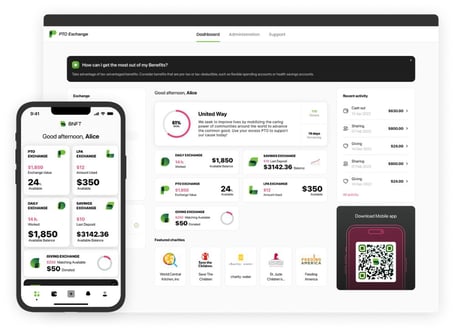 Research shows that only 4 in 10 employees use all of their PTO in a given year. The rest carry unused time forward, lose it, or struggle to take it at all.
This creates a tension HR teams know well. PTO is meant
to support employees, but the structure assumes people
can step away from work easily and often. For many roles, workloads, and life stages, that assumption no
longer holds.
As a result, employees make workarounds. 3 out of 4 workers report taking a vacation they didn’t actually need, simply to avoid losing accrued time. That time off doesn’t reduce stress or solve financial pressure. It just checks a box.
PTO was built as a vacation benefit for an “average” employee. Today’s workforce spans multiple generations,
income levels, and personal realities. When benefits are designed for the middle, value quietly disappears at
the edges.
Unused PTO becomes both an employee frustration and an employer liability. And it raises a bigger question
HR leaders are starting to ask:
Is your PTO policy delivering real value to the people it’s meant to support?
Different Generations. One Rigid Benefit.
Today’s workforce spans four generations, each at a different stage of life and facing different financial realities. Yet PTO treats them all the same.
A single pool of time off assumes everyone wants the same outcome from the same benefit. In practice, that assumption no longer holds.
Younger employees are earlier in their careers, often balancing debt and limited savings. Mid career employees are managing families, healthcare costs, and peak workloads. Older employees are thinking about retirement timing and financial security. PTO offers each of them the same thing: time away from work.
The result is predictable: PTO accumulates instead of being used.
Research shows that 2/3 of employees are carrying 2 to 5 or more weeks of unused PTO. That unused time represents very different missed opportunities depending on where someone is in their career.
For employers, this misalignment creates another issue. PTO accrues at an employee’s current rate of pay, meaning PTO liabilities grow as wages increase. A benefit designed to support employees quietly becomes a growing financial obligation.
This is the core tension HR teams face. A workforce with increasingly diverse needs is being served by a benefit built for uniform outcomes.
When one benefit is expected to serve every generation in the same way, value is lost across the board.
Mapping the Gaps in a One-Size PTO Policy
Most organizations offer a single PTO policy to a workforce made up of very different people.
On paper, the benefit is the same. In practice, the value is not.
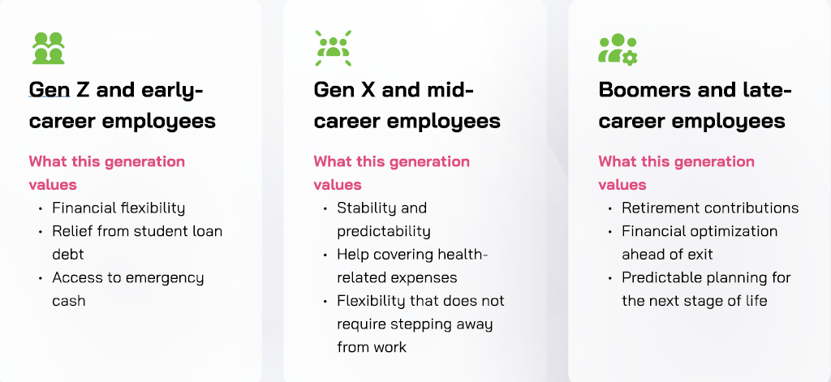
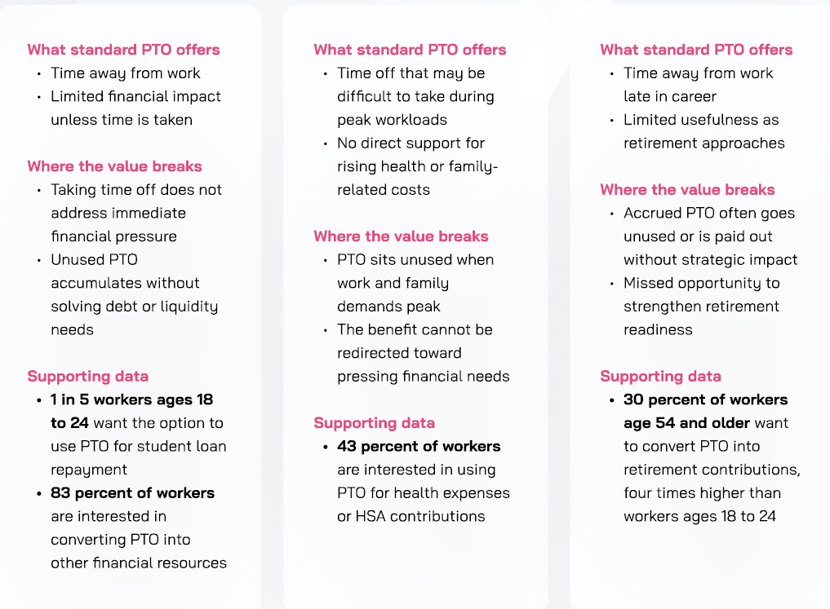
The map below shows where traditional PTO aligns and where it breaks across generations.
This isn’t about preference. It’s about whether a benefit designed around time off can
realistically support employees at different stages of life.
PTO Is More Valuable When Employees Have Choice
 For years, PTO has been framed almost exclusively as time away
from work. But the data shows that many employees are looking for
something broader: the ability to use the value of PTO in ways that
fit their lives.
Across generations, employees see PTO as stored value. When that
value is locked into time off only, it limits how useful the benefit can
be, especially when workloads, finances, or life circumstances make
taking time away difficult.
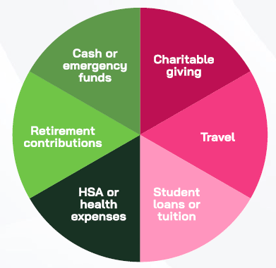
Research shows that 83 percent of workers want the option to convert PTO into other resources. That interest spans age groups and income levels, suggesting this is not a niche preference but a widespread expectation.
Employees also demonstrate a strong desire for flexibility that supports others, not just themselves. 80 percent say they would donate PTO to a coworker in an emergency. That signals something important: employees value choice, agency, and the ability to direct benefits where they matter most.
This is where PTO starts to function less like a vacation policy and more like a flexible resource. The underlying benefit doesn’t change. What changes is how employees can access its value.
Flexibility becomes the common thread. Not because employees want less time off, but because they want the freedom to decide how their PTO supports them at different moments in their lives.
Flexibility Changes How Employees Value their Employer
Retention challenges are often discussed in terms of compensation, culture, or career development. Benefits rarely sit at the center of that conversation unless they fail.
Flexible PTO changes that dynamic. When employees can use the value of PTO in ways that align with their real needs, the benefit stops feeling generic and starts feeling intentional. That shift has a measurable impact on how employees view their employer.
Research shows that 7 out of 10 employees say access to flexible leave options makes them feel their company values and appreciates them. That sense of being valued is one of the strongest predictors of engagement and loyalty.
The retention signal is even clearer. 9 out of 10 employees say flexible leave options would make them more likely to stay with their employer. This isn’t about adding more time off. It’s about allowing employees to extract meaningful value from a benefit they already earn.
For HR and Total Rewards teams, flexibility becomes a strategic lever. It strengthens employer brand, supports retention across generations, and improves the perceived return on existing benefits spend.
Close Your Benefits Gap with PTO Exchange
Across generations, the takeaway is consistent: Employees don’t necessarily need more PTO, they need more ways to use the value they already earn.
PTO Exchange helps organizations unlock that value without changing their core PTO policy. By giving employees choice, PTO becomes relevant at every stage of life while remaining simple to manage.
With PTO Exchange, organizations can:
-
Let employees convert unused PTO into cash when they need liquidity
-
Support student loan repayment for early-career employees
-
Enable contributions to retirement accounts and HSAs
-
Allow PTO donations to coworkers during personal emergencies
-
Reduce unused PTO balances and long-term balance sheet exposure
-
Offer one benefit that adapts to a multi-generational workforce
For HR and Total Rewards teams, this means fewer gaps, higher perceived value, and a benefit that works harder for both employees and the business. If you’re rethinking how PTO fits into your benefits strategy, the next step is to see how flexibility works in practice.
Ready to Modernize Your PTO Program?
Unused vacation doesn’t have to go to waste. With PTO Exchange, you can turn unused PTO into a strategic benefit—helping employees support their families, reduce debt, save for retirement, or simply gain peace of mind.
👉 Schedule a personalized demo
👉 Explore use cases and client stories

![image 34 [Vectorized]-1](https://ptoexchange-6854878.hs-sites.com/hubfs/PTO2026/image%2034%20%5BVectorized%5D-1.svg)
![image 35 [Vectorized]](https://ptoexchange-6854878.hs-sites.com/hubfs/PTO2026/image%2035%20%5BVectorized%5D.svg)
![image 36 [Vectorized]](https://ptoexchange-6854878.hs-sites.com/hubfs/PTO2026/image%2036%20%5BVectorized%5D.svg)
![image 37 [Vectorized]](https://ptoexchange-6854878.hs-sites.com/hubfs/PTO2026/image%2037%20%5BVectorized%5D.svg)